
Australia’s resources sector is under increasing pressure to manage emissions while maintaining safe and reliable operations. For remote and critical sites, energy transition is not about rapid change or abstract targets. It is about making practical, staged improvements that deliver operational and commercial value in the conditions sites actually operate in.
As shared during my recent speech at the Business News industry event, the transition is complex, site‑specific and deeply operational. For most operators, the priority remains clear: keep sites running safely and reliably while finding smarter ways to manage energy, fuel and risk.
The Reality on Remote Sites
Operators across the resources sector are navigating a convergence of challenges. On remote sites, this can include managing long-distance fuel logistics, maintaining uptime across 24/7 operations and reducing inefficiencies caused by equipment travelling significant distances simply to refuel.
Rising energy and fuel costs, increasing emissions expectations, supply chain risk and heightened scrutiny around resilience are all coming to bear at once.
For remote mine sites and critical infrastructure projects, power reliability remains non‑negotiable. Outages do more than reduce productivity. They affect safety, compliance and overall site performance. As a result, transition strategies must work under real operating conditions, not just in theory.
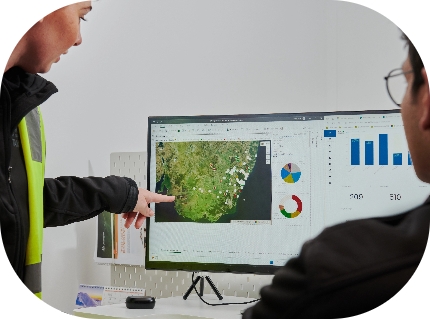
How energy systems are designed and managed on site has direct and measurable impacts on performance — emissions, uptime and operational costs can all be optimised with better fuel planning, storage, monitoring and management across a site.
A Practical View of Energy Transition
With diesel prices at historic highs and logistics increasingly constrained, operator’s focus has shifted from replacement to optimisation.
Fuel remains one of the largest operating costs on site, particularly for remote operations. Now, more than ever, the need to conserve fuel and optimise how it is used has become critical.
Energy transition, in this context, is not about removing existing systems before viable alternatives are in place. It is about improving efficiency, resilience and control across the energy system as a whole.
Two Pathways, One Goal
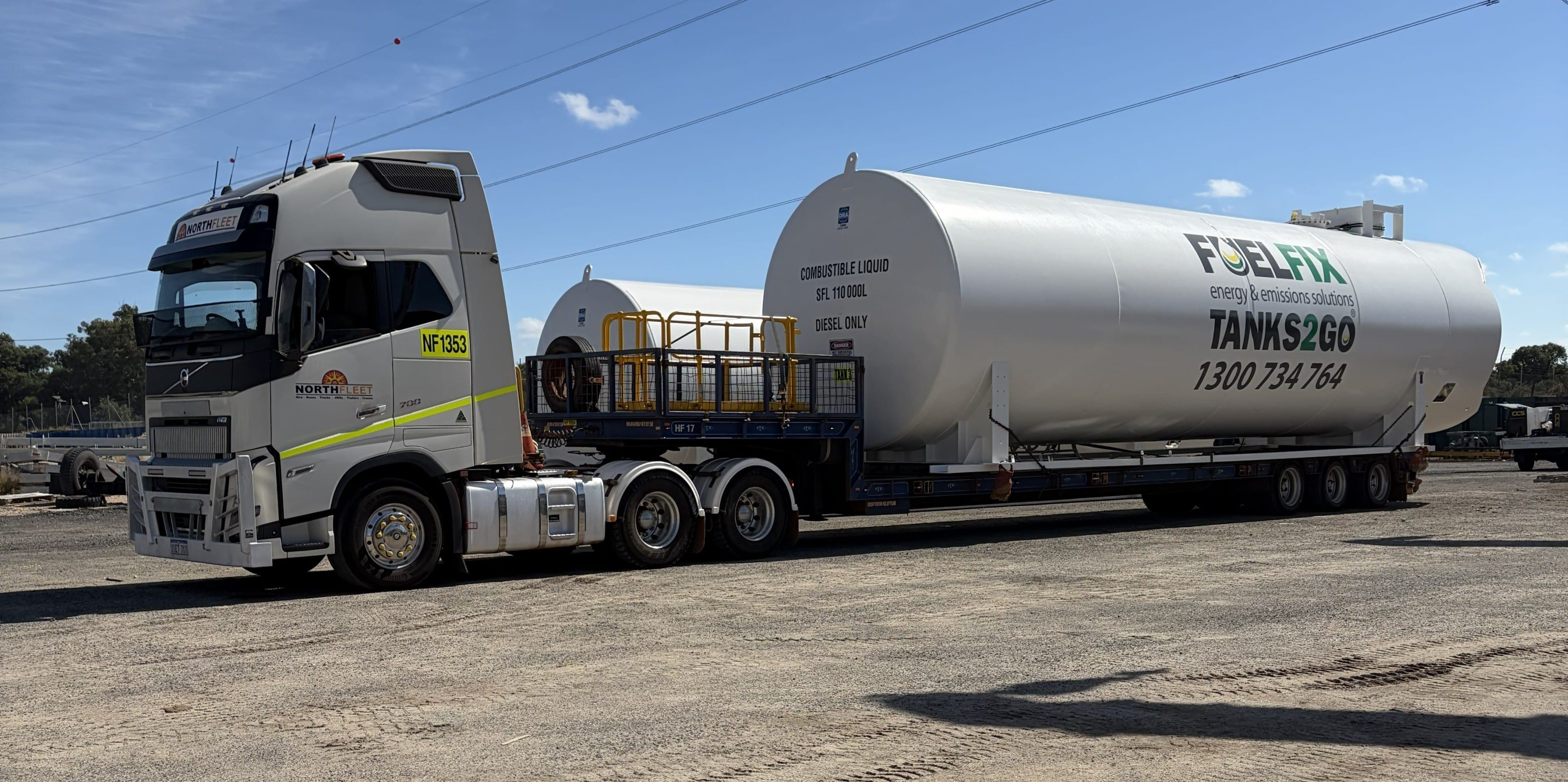
Fuelfix’s approach is guided by its Two Pathways, One Goal strategy. The first pathway focuses on optimising the diesel and fuel systems that keep sites running today. This includes improving efficiency, reducing waste and extending asset life.
The second pathway supports the staged introduction of lower‑emissions technologies, such as battery energy storage and hybrid systems, where they make operational and commercial sense.
Together, these pathways give operators a controlled, low‑risk way to progress toward lower emissions without compromising reliability. This balanced approach reflects realistic progress.
The future of resources will be built through incremental improvement, smarter use of energy, whatever form that energy takes, and trusted partnerships that understand site realities.
What Hybrid Energy Looks Like in Practice
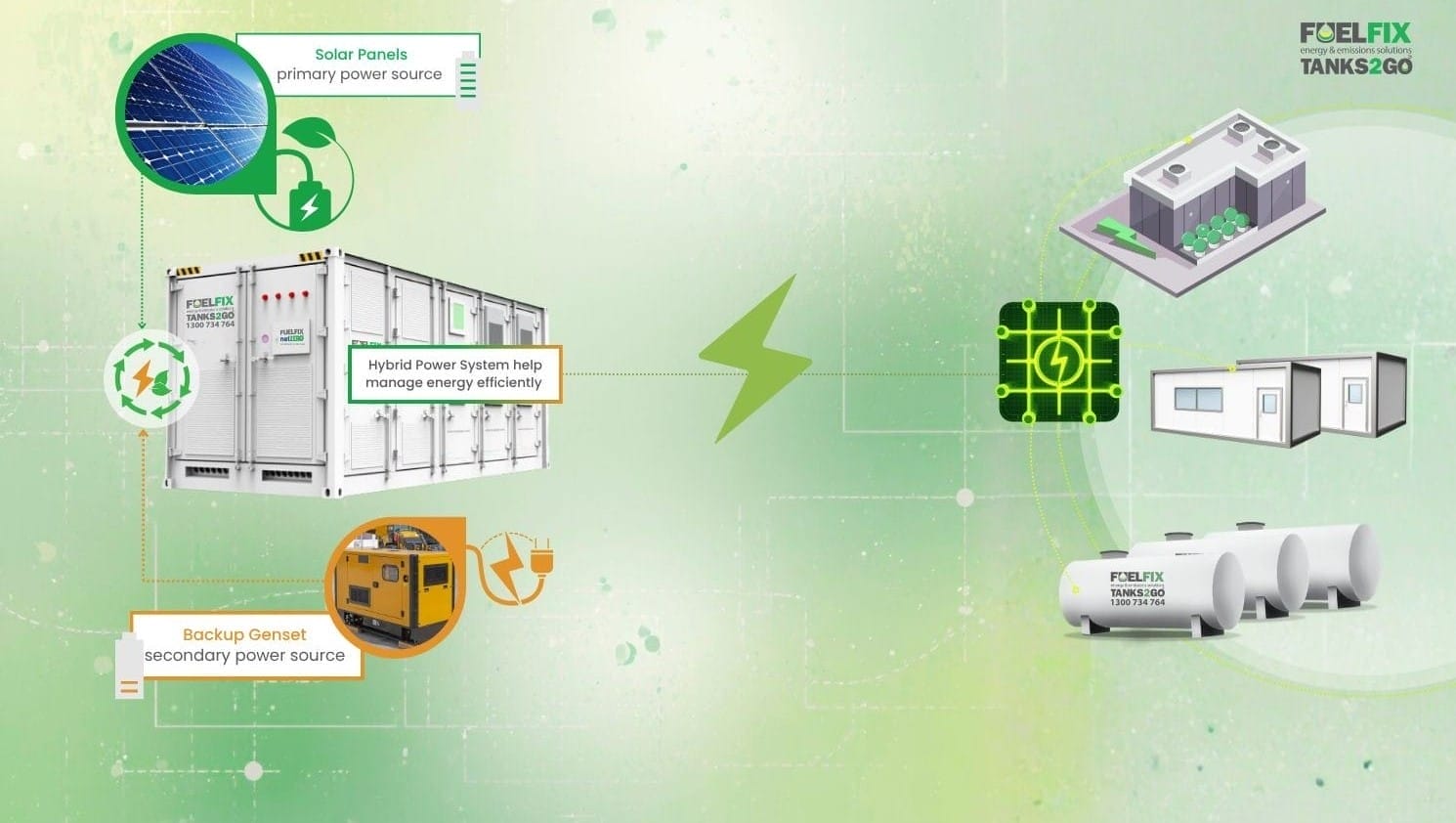
In practice, hybrid energy systems are designed to support existing infrastructure in remote environments where continuous diesel generation has traditionally been the only option.
On a remote iron ore mine site near Newman, Fuelfix deployed a hybrid-powered refuelling solution combining battery energy storage with diesel backup to support a temporary fuel facility operating around the clock. Traditionally, a site of this nature would rely on a diesel generator running continuously, regardless of actual fuel dispensing activity, increasing fuel consumption, maintenance frequency and operational downtime.
By integrating battery storage into the system, the generator operated only when required rather than continuously. This reduced generator runtime, lowered fuel consumption and minimised maintenance interruptions while maintaining reliable refuelling capability for 24/7 mining operations.
The hybrid setup also helped reduce the logistical and operational burden associated with constant generator refuelling and servicing on remote sites, while supporting the client’s broader operational efficiency and emissions objectives.
At the same time, diesel generation continues to play a critical role in maintaining uptime on remote sites where operations run continuously and interruptions to fuel availability can quickly impact productivity.
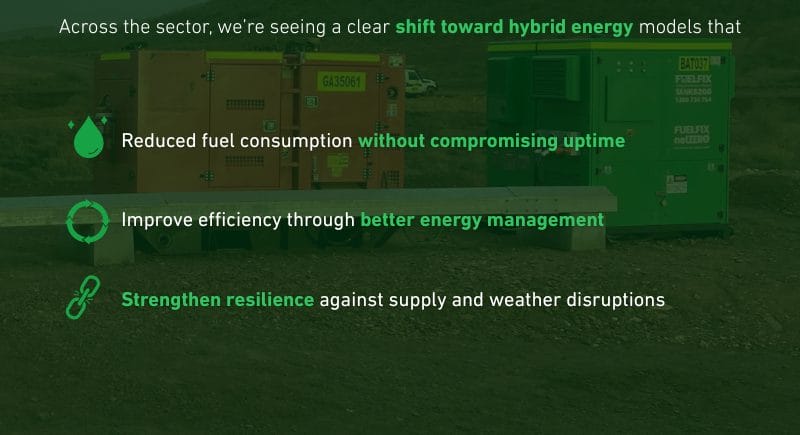
Introducing batteries and hybrid systems, where they make commercial and operational sense, can reduce generator runtime, smooth peak loads, lower maintenance requirements and improve safety.
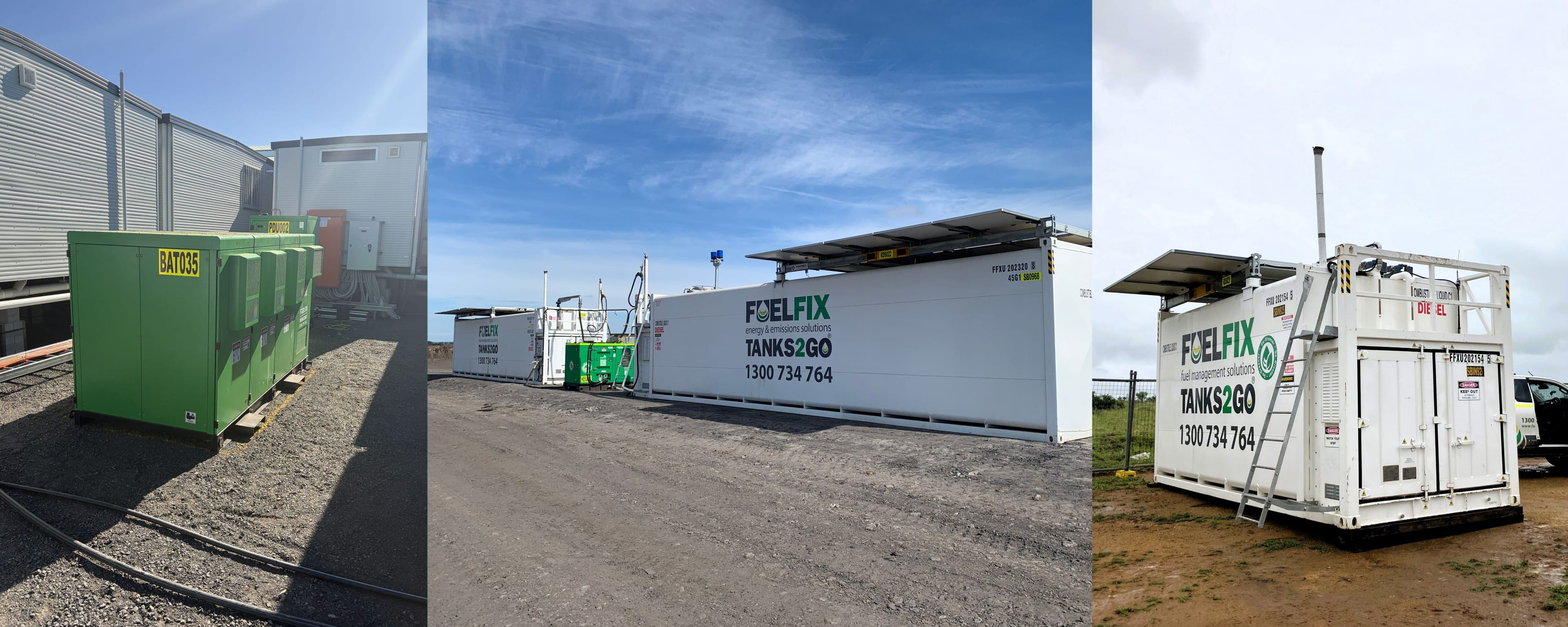
Successful deployments are site-specific and staged, with system design shaped by load profile, logistics, uptime requirements and how the site operates day to day.
Outcomes That Matter on Site
For operators, the success of energy transition is measured in outcomes, not ideology. Practical hybrid and optimised systems can reduce fuel consumption, lower operating costs and decrease emissions intensity without jeopardising reliability.
In remote operations, they can also reduce unnecessary equipment movement, minimise downtime associated with refuelling and improve access to fuel where machinery operates continuously across large sites.
Just as importantly, they give operators greater visibility and control over their energy systems. That control supports both short‑term operational stability and longer‑term decarbonisation goals, without introducing unnecessary risk.
From Technology to Site‑Ready Solutions
Delivering these outcomes requires more than technology alone. Fuelfix combines global battery manufacturing capability through its partnership with Sicon Chat Union with over 20 years local engineering, integration and on‑the‑ground support tailored for Australian conditions.
This ensures advanced energy solutions are not only technically capable, but deployable, supported and fit for the environments resources operators work in every day.
Is Your Site Ready for the Next Step?
Not every site is ready for the same step, but many are ready for their next one.
Key considerations include remote operations where fuel logistics create operational inefficiencies, particularly where mobile equipment depends on scheduled refuelling cycles or where temporary infrastructure operates completely off-grid. Addressing these areas first allows organisations to reduce emissions, cost and risk with confidence, not disruption.
Let’s Talk About a Practical Path Forward
If you are assessing how to reduce energy cost, operational risk or emissions without compromising site reliability, Fuelfix can help. Our team works with operators to identify practical, commercially grounded energy solutions aligned with real site conditions.
Fuelfix has delivered site-ready hybrid and fuel solutions that help remote operations reduce generator runtime, minimise on-site refuelling requirements and improve reliability across temporary and permanent infrastructure.
Explore our real-world project examples:
- Hybrid-powered refuelling solution for NRW Civil & Mining
- Reliable and greener fuel storage solution for mining in the Peel Region
You can also explore our broader thinking on practical decarbonisation pathways for mining and infrastructure operations.
Our team can help assess whether hybrid energy or fuel optimisation could reduce operating cost and generator runtime across your site.