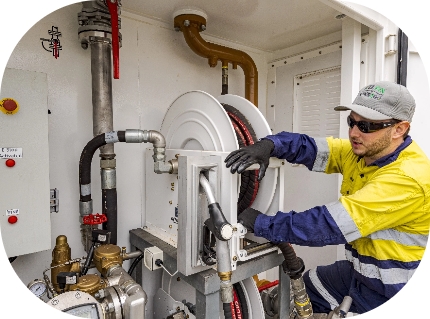

The holiday period is one of the riskiest times for fuel storage non‑compliance. Sites are quieter, key people are on leave and small issues are easy to miss until regulators, insurers or major clients come calling in the new year. AS1940 sets the benchmark for safe storage and handling of flammable and combustible liquids in Australia and in 2026 regulators are increasingly expecting it to be treated as the minimum standard rather than a “nice to have”.
For operators storing diesel, petrol or a combination of both, the start of the year is the ideal time to reset, inspect and close any compliance gaps. Done well, this isn’t just about avoiding fines, it’s about reducing risk, extending asset life and improving operational efficiency across your fleet and fixed sites.
As an Australian leader in energy and emissions management solutions, Fuelfix helps businesses translate AS1940 from a dense technical standard into practical, site-ready action. Use this checklist as your guide to a compliant, safer and smarter fuel storage setup in 2026.
1. Start with a post‑holiday tank health check
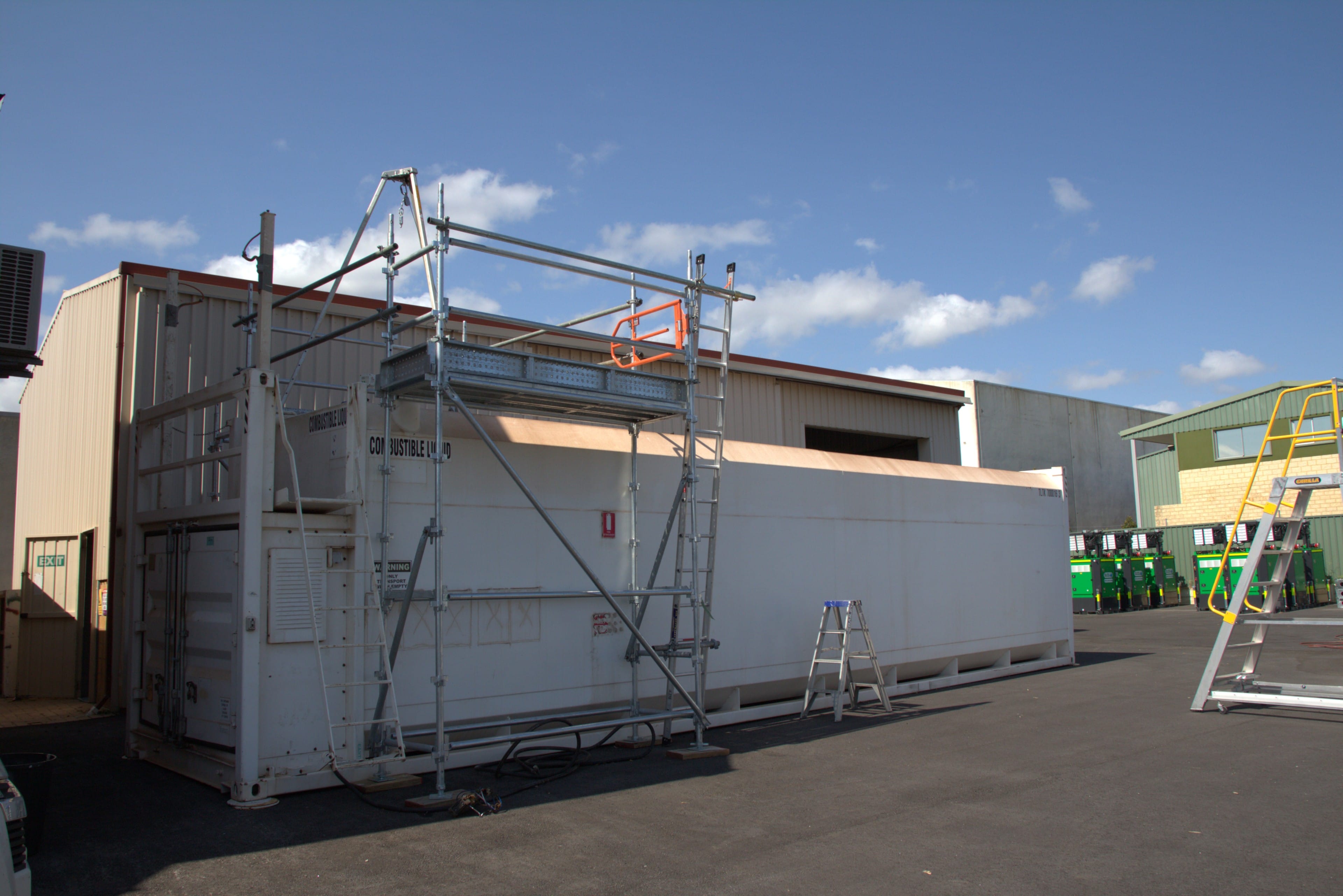
Begin with a structured visual and functional inspection of every fuel storage asset on site – above‑ground tanks, self‑bunded tanks, portable fuel tanks and key pipework.
Focus on:
- Physical condition: Look for rust, impact damage, leaks, bulging, settling of foundations, damaged ladders or platforms and any obvious DIY modifications.
- Bunding and containment: Check concrete or steel bunds for cracks, corrosion and accumulated liquid. Remove water, sludge and debris and confirm the bund still provides adequate containment for the tank volume.
- Site layout: Confirm tanks still sit within the required separation from buildings, boundaries, traffic routes and ignition sources. Temporary structures, new plants or storage can creep into exclusion zones over time.
- Access and housekeeping: Ensure clear access for deliveries, maintenance and emergency services. Remove stored materials, rubbish and vegetation from around tanks and dispensers.
Document findings with photos and simple checklists so you can track deterioration over time and demonstrate due diligence during any inspection.
2. Verify overfill level and leak protection
Overfills, undetected leaks and inaccurate tank level data are common triggers for both safety incidents and regulatory action. At the start of the year, test and verify all your monitoring and protection layers.
Key steps:
- Calibrate gauges and ATG: Confirm level gauges and automatic tank gauging (ATG) are reading accurately and that Safe Fill Levels are correctly set. This is critical for compliant deliveries and to prevent overfilling.
- Test alarms and cut‑offs: Simulate high‑level and overfill conditions to confirm alarms activate and any automatic cut‑off systems function as designed. Record these tests in your maintenance log.
- Inspect pipework and dispensers: Walk the full length of pipe runs, hose reels and dispensers. Look for stains, corrosion, sweating joints, damaged hoses and worn nozzles. Repair or replace anything suspect.
- Confirm spill response readiness: Check that spill kits are correctly stocked, located near high‑risk areas and that staff know how and when to use them. Replace any expired or used components
Fuelfix’s integrated fuel management systems and automatic tank gauging make this stage significantly easier. With real‑time level data, alarm notifications and transactional records, you gain the visibility to detect issues early instead of discovering them during an audit or after an incident.
3. Tighten ignition control, ventilation and fire protection
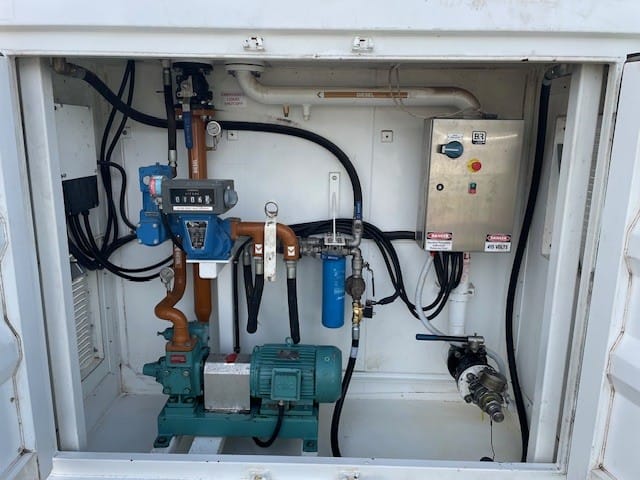
AS1940 places strong emphasis on controlling ignition sources and ensuring adequate ventilation and fire protection. After shutdowns or reduced staffing, it’s easy for portable electrical equipment, vehicles and stored materials to drift into hazardous areas.
Review:
- Hazardous areas and electrical gear: Confirm hazardous area classifications are still valid and that all electrical equipment within those zones is appropriately rated. Remove non‑compliant tools, lights or power boards that have crept in.
- Vents and breathers: Inspect vents, breather valves and any flame arrestors for blockages, damage or corrosion. Confirm they terminate in safe locations and are not obstructed by new structures.
- Firefighting equipment: Check extinguishers, hose reels and any fixed systems for service tags, pressure, physical condition and accessibility. Ensure there is suitable equipment for flammable and combustible liquids and that signage is clear.
- Housekeeping around tanks: Remove combustible materials, empty pallets and excess vegetation. Mark and enforce “No smoking / No ignition sources” zones.
If you’ve upgraded tanks or equipment over the past year, this is also the time to review whether your fire and explosion risk assessments need updating. Fuelfix’s field teams can support by aligning hardware upgrades with appropriate risk controls, not just swapping components.
4. Refresh signage, labelling and documentation
Even well‑engineered systems can fall foul of regulators if documentation and signage have not kept pace with change. Post‑holidays, make sure what is on paper and on the ground match the reality of your operations.
Check that:
- Tanks and pipework are clearly labelled: Every tank, line and dispenser should display the correct product name and hazard information. This reduces the risk of mis‑delivery and supports emergency response.
- Safety and emergency signage is current: Warning signs, emergency contact details and volume or access limits must be visible, legible and weather‑resistant. Replace faded or damaged signs.
- Site plans and risk assessments are up to date: If you’ve added tanks, relocated assets, changed volumes or modified process flows, update your drawings, risk assessments and procedures accordingly.
- Maintenance and training records are complete: File inspection logs, calibration reports, service dockets and training attendance records together. This paper trail is often what separates a warning from a fine.
Fuelfix’s project and service teams are used to packaging this information into easy‑to‑use compliance folders and digital records, helping operations and HSEQ teams stay aligned.
5. Re‑induct your people
The best engineered fuel facility can be compromised by poor behaviours and outdated habits. As your workforce returns from leave, treat the first few weeks as a re‑set for safe fuel handling.
Focus on:
- Site‑specific inductions: Brief staff and contractors on current fuel layouts, exclusion zones, emergency procedures and any changes made in the last 12 months.
- Role clarity: Make it clear who is authorised to accept deliveries, adjust system settings, isolate equipment and lead incident response.
- Toolbox talks on real issues: Use examples of recent near‑misses, leaks or equipment failures (on your site or in your industry) to ground the discussion in reality.
- Competency on new systems: If you’ve added Fuelfix fuel management systems, automatic tank gauging or upgraded dispensers, invest time in demonstrating their use and explaining why they matter for compliance.
Many Fuelfix customers find that structured, recurring service visits double as informal training sessions, with technicians reinforcing correct use and basic checks while they work.
Fuelfix in action: 10‑year compliance upgrade example
A recent civil contracting operation illustrates how Fuelfix turns ageing tanks into AS1940‑compliant assets without unnecessary replacement.
Our client (Ditchfield Contracting) had older self‑bunded tanks approaching their 10‑year inspection deadline. Rather than buying new units, they engaged Fuelfix for a full assessment and upgrade program.
The scope included:
- 10‑year tank inspection and deep clean
- Installation of Fuelfix fuel management system (FMS) and automatic tank gauging (ATG)
- Addition of overfill warning alarms, trap breathers and high‑mast filtration
- Upgrade of dispensing hoses, solenoids and nozzles
- Commissioning at the final site location
Through weekly progress meetings, Fuelfix worked closely with the customer to refine recommendations and deliver exactly what they needed. The result: two fully compliant tanks now operational at separate yards, complete with scheduled servicing and full data visibility.
This approach saved the customer significant capital while delivering modern safety, compliance and fuel control – a win that scales across multiple sites
6. Turn your checklist into a 2026 action plan with Fuelfix
A one‑off inspection is a good start, but sustainable AS1940 compliance is about systems, not sporadic fixes. That’s where Fuelfix’s combination of compliant hardware, smart monitoring and experienced technicians makes a difference.
A practical 2026 action plan could look like this:
I. Audit: Commission a site‑by‑site AS1940 review that captures tank condition, layout, risk controls, documentation and training.
II. Prioritise: Rank findings by risk and cost impact. Address critical safety and environmental issues first, then optimise for efficiency and data visibility.
III. Upgrade: Implement targeted upgrades: overfill and high‑level protection, improved bunding and containment, modern FMS and ATG, safer dispensing equipment and better signage.
IV. Digitise: Use fuel management systems and gauging to provide live data and automated records that support both compliance and operational decision‑making.
V. Maintain: Lock in scheduled inspections, 10‑year tank checks and preventative maintenance so issues are identified and resolved before they become compliance problems.
Fuelfix has already helped civil, mining, transport, agriculture and industrial customers move from ageing, high‑risk fuel infrastructure to modern, compliant and data‑rich solutions without unnecessary capital spend. The result is the same pattern: fewer surprises, stronger regulator relationships and a safer, more reliable fuel supply for the business.